1. Record enquiries in one place
When prospective guests contact you through WhatsApp, by phone, or through another channel, record their contact name, the package they are interested in, travel dates, number of participants, and any relevant requirements. Distinguish confirmed information from details that still need to be checked. Avoid storing identity numbers or personal documents unless they are needed to run the trip.
Assign someone to follow up on each enquiry. Shared notes help other team members understand the context when the person responsible is unavailable.
2. Check the schedule and capacity before confirming
Make sure the package, departure date, number of seats, and price match the current offer. Distinguish enquiries from reservations that have actually held seats. If the number of participants or travel date changes, check availability again before sending the guest a new confirmation.
For example, an enquiry for four people on a Saturday departure does not necessarily mean four seats have been held. The team needs to know when the reservation was made, how long seats are held, and who can release them. The operator sets these rules according to its services and business policies.
3. Keep booking and payment statuses separate
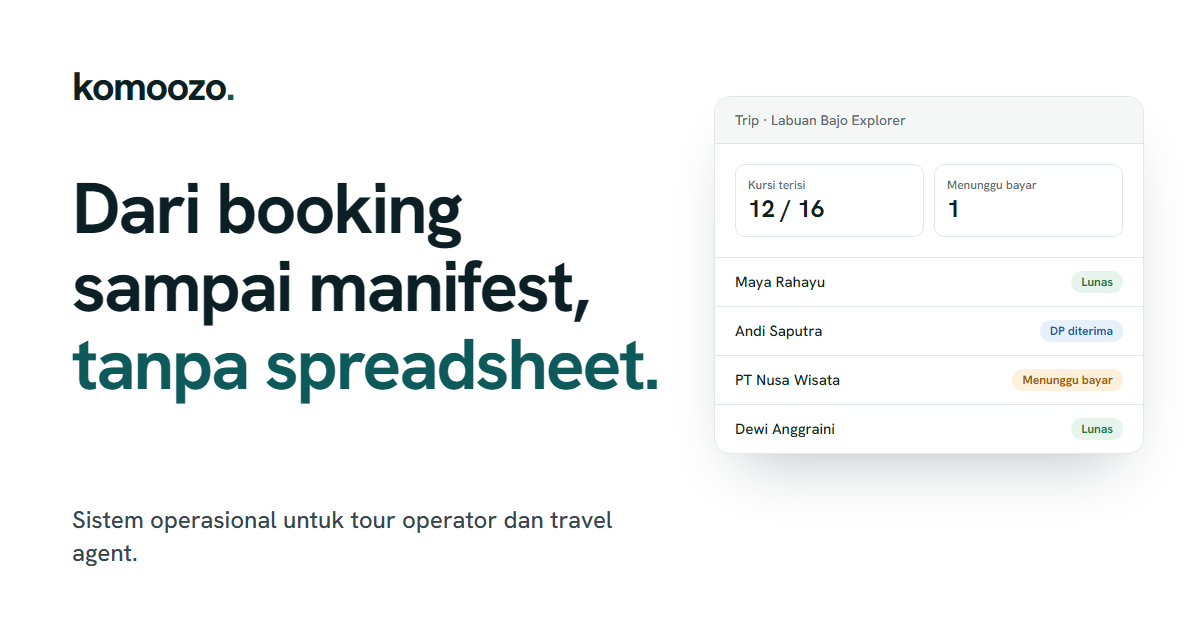
Booking status shows where an order is in the operational process, while payment status shows what has or has not been paid. They are related but not always the same: a booking may be awaiting a partial payment, and a recorded payment may still need to be verified.
Use an invoice that specifies the amount and due date agreed upon. Record payment evidence against the correct transaction, then have an authorised staff member verify it. If there is an overpayment or cancellation, follow the refund policy and record the resolution separately.
4. Complete participant details and prepare for departure
Before the operational deadline, check participant numbers and names, meeting points, and any other information the field team needs. Match changes against the source booking and share relevant information with the assigned staff. Avoid sharing complete lists containing sensitive data in groups that do not need it.
Prepare the manifest from checked participant data. Flag information still awaiting confirmation and decide who is responsible for confirming the version that will be used in the field.
5. Close out the trip and review the process
After the trip, reconcile any outstanding items: participant changes, payments not yet verified, cancellations, and agent commissions, if applicable. Do not assume a commission or payment is settled just because the trip status has changed; check the relevant transactions and approvals.
Record recurring reasons for corrections. For example, if participant names are often incomplete, improve the questions asked during booking. A clear process remains important even when the team uses an app.
How does Komoozo help?
Komoozo provides booking records, schedules and capacity, invoices and payments, and manifests in one workspace. Agents can be given access according to their roles and applicable access rules. Feature availability depends on the plan and user permissions; commercial decisions, transfer verification, and cancellation policies remain the operator’s responsibility.