Separate products and departures
Store the name, description, duration, inclusions, exclusions, and general information as a package. Create separate schedules for departure dates, capacity, departure points, applicable prices, and sales status. This lets one package have multiple schedules without duplicating all its information.
Write information that can be put into practice
Marketing descriptions should align with operational requirements. Make sure the itinerary, included services, participant restrictions, and important notes have been checked by the people running the trip. Avoid making absolute promises about conditions outside the operator’s control.
Manage capacity through transactions
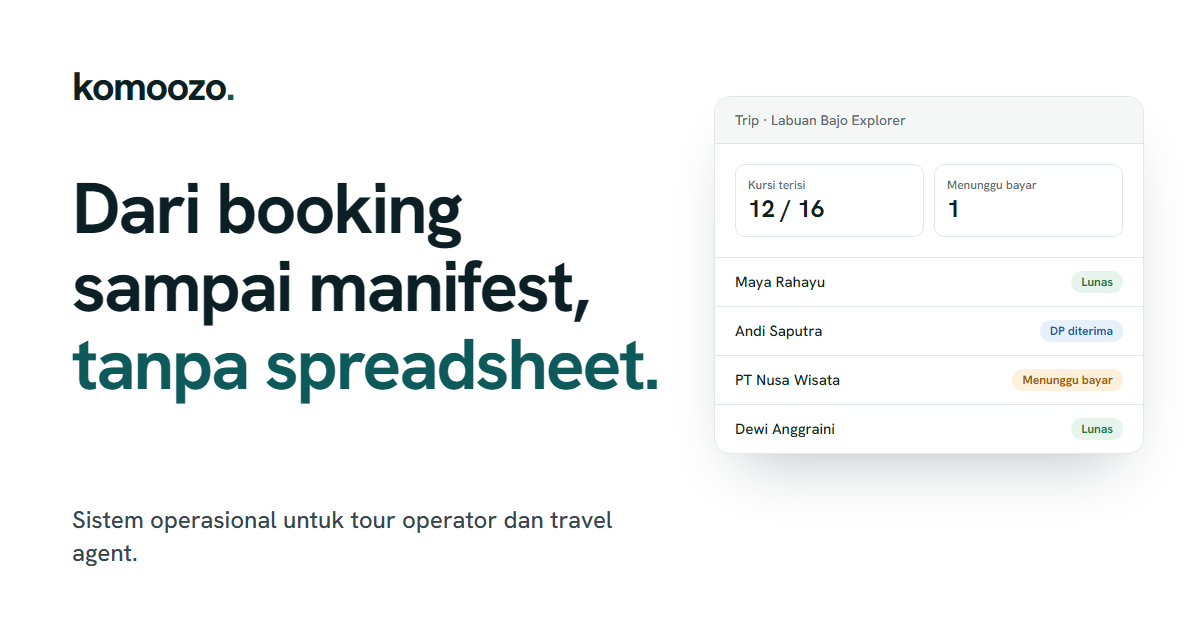
Decide when a seat is considered held and when it becomes available again, such as when an order expires or is cancelled. Use valid bookings to track capacity rather than a separate manual count. If capacity needs to be increased or reduced, record the reason and make sure the sales team sees the latest figures.
Review before publishing
Check the title, price, dates, terms, and action buttons in the public view. Keep schedules that are not ready as drafts. Once bookings have been made, handle significant changes carefully and communicate them to affected parties according to business policy.